What is Emotional Intelligence?

three kids showing different emotions

Imagine if every child in our community enjoyed going to school, made friends easily, and graduated on time. Imagine if bullying didn’t exist, and everyone treated each other with kindness and respect, even during disagreements.

Emotional intelligence is the answer to unlocking that reality.

Just like we need air to breathe, humans require emotional intelligence to succeed in just about everything: from learning, making friends, and discussing tough topics to bouncing back after a disappointment.

Emotional intelligence, sometimes referred to as EQ, is the set of critical skills necessary to navigate any emotion, conversation, or situation, no matter how difficult.

You might explain the definition of emotional intelligence to a child like this:

“Emotional intelligence means understanding your feelings and other people’s feelings and knowing what to do with those feelings.”

The concept of emotional intelligence gained widespread attention through the work of psychologist Daniel Goleman in the 1990s. Since then, it has been adapted into something much more practical, especially for children.

Just as children aren’t born knowing their ABCs and 123s, emotional intelligence is something they must learn over time at school and at home. Developing emotional intelligence equips kids to understand their emotions, manage them, and respond to the emotions of others. That means learning how to handle frustration, build friendships, manage anxiety, and navigate conflict.

Children today are growing up in a world of constant stimulation, social pressure, and increasingly fewer opportunities to practice real-life interaction. Many are navigating big emotions without clear guidance on how to handle them.

Emotional intelligence gives young people that guidance.

Emotional Intelligence vs. IQ: What's the Difference?

Most of us grew up thinking success came down to one thing: intelligence.

Good grades. Strong test scores. Academic achievement.

That’s IQ.

But if you’ve ever seen a child shut down during a challenge, struggle to work with others, or react quickly without thinking, you already know there’s more to success than academics.

That’s where emotional intelligence comes in.

IQ (Intelligence Quotient) measures how well a child can think, reason, and learn.

EQ (Emotional Quotient, referred to as Emotional Intelligence) measures how well a child can understand emotions, manage behavior, and navigate relationships.

Both matter. But they do different work.

A child with a strong IQ might know the right answer.

A child with strong EQ knows how to:

  • Handle getting it wrong
  • Ask for help
  • Work through frustration
  • Keep going when things get hard

Research continues to show that emotional intelligence plays a major role in:

  • Mental health
  • Relationship quality
  • Long-term success

It’s not about choosing one over the other.

It’s about recognizing that EQ is the skill behind how everything else works, or the skill behind every skill.

The 5 Core Components of Emotional Intelligence in Children

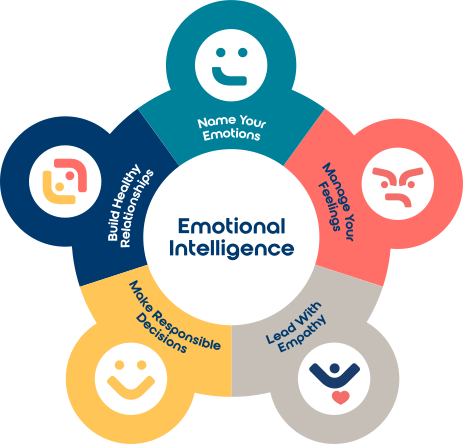
Emotional intelligence is made up of a set of five core skills that help children understand themselves, connect with others, and make thoughtful choices.

These skills develop over time and can be taught, practiced, and strengthened through everyday experiences.

Research in child development, including the work of Daniel Goleman and the Harvard Center on the Developing Child, shows that these skills grow through consistent relationships, real-life practice, and supportive environments.

These skills are connected and often show up together. Children don’t learn them in order. They build them over time through real-life experiences and support from trusted adults around them.

1. Name Your Emotions (Building Self-Awareness)

1. Name Your Emotions (Building Self-Awareness)

One of the most important ways children build emotional intelligence is by learning to notice and name what they’re feeling.

When children can identify their emotions, it becomes easier to understand the emotions, what’s happening inside, and choose what to do next.

What naming your emotions looks like:

  • Preschool: “I feel mad,” or “My tummy feels funny when I’m nervous.”
  • Elementary school: “I’m frustrated because I can’t figure out this math problem.”
  • Middle school: “I’m anxious about the presentation and also excited.”
  • Teen: “My friends excluded me, and it makes me really sad.”

Real scenario:

A child notices a tight feeling when their friend starts playing with someone else and realizes, “I think I feel jealous.”

That awareness creates the opportunity for a different response.

How to teach it:

2. Manage Your Feelings (Builds Self-Management)

2. Manage Your Feelings (Builds Self-Management)

Managing emotions isn’t about ignoring or suppressing them. It’s about learning that feelings are real, and we can choose how to respond in ways that help us move forward.

What managing your feelings looks like:

  • Preschool: Taking deep breaths when upset instead of hitting
  • Elementary school: Walking away from a frustrating situation to cool down
  • Middle school: Using positive self-talk before a test
  • Teen: Pausing before reacting in a difficult or emotional situation

Real scenario:

A child loses a game and feels disappointed.

Instead of having a meltdown, they take a moment, step away, and rejoin the activity when they’re ready.

How to teach it:

  • Calm-down strategies (breathing, counting, movement)
  • Impulse control games (Red Light, Green Light, Freeze Dance, Simon Says)
  • Practicing strategies when children are calm
  • Modeling emotional regulation in real moments

3. Lead With Empathy (Builds Social Awareness)

3. Lead With Empathy (Builds Social Awareness)

Leading with empathy is having the ability to recognize that other people have their own thoughts, feelings, and experiences and responding to them with care.

This skill develops over time. Younger children tend to focus on their own perspective, while older children begin to understand how others may feel, even when it’s different from their own experience.

What leading with empathy looks like:

  • Preschool: “She’s crying because she’s sad her toy broke.”
  • Elementary school: “He’s being mean because he’s probably upset about something.”
  • Middle school: “I think she feels left out, even though she says she’s fine.”
  • Teen: Recognizing unspoken emotions, social dynamics, and how actions impact others

Real scenario:

A child notices a classmate sitting alone and invites them to join a game or sit together.

How to teach it:

  • Asking perspective-taking questions (“How do you think they felt?”)
  • Discussing emotions in books and real-life situations
  • Encouraging inclusive behavior
  • Creating opportunities to help others

4. Build Healthy Relationships

4. Build Healthy Relationships

Emotional intelligence becomes visible in how children interact with others. EQ empowers children to make friends, communicate clearly, and solve problems with others.

Learning how to build healthy relationships is directly connected to essential leadership skills children will eventually need in the workplace, including effective communication, collaboration, and teamwork.

Successfully building healthy relationships requires all the other skills related to emotional intelligence.

What building healthy relationships looks like:

  • Preschool: Sharing toys and taking turns
  • Elementary school: Compromising on playground rules, apologizing sincerely, and including others
  • Middle school: Navigating friendships, resolving disagreements, and expressing thoughts clearly
  • Teen: Navigating group projects, standing up to peer pressure, and resolving conflicts respectfully

Real scenario:

Two children disagree about how a game should be played.

Instead of arguing, they talk through the problem and agree on a solution.

How to teach it:

  • Role-playing social situations
  • Collaborative activities and hands-on group work
  • Coaching through real conflicts
  • Modeling respectful communication

5. Make Responsible Decisions

5. Make Responsible Decisions

People with high emotional intelligence know how to make thoughtful choices that consider themselves and others.

For children, this skill shows up as the ability to understand:

  • What they’re feeling
  • What their options are
  • How their actions might affect themselves and others

What making responsible decisions looks like:

  • Preschool: Cleaning up after themselves
  • Elementary school: Thinking before reacting in a social situation
  • Middle school: Considering consequences before making a choice
  • Teen: Making decisions aligned with their values, even under pressure

Real scenario:

A child is about to say something hurtful in an argument.

They pause and choose a different response.

How to teach it:

  • Talking through choices and consequences
  • Asking reflective questions (“What could you do next?”)
  • Giving children space to make and learn from decisions
Emotional intelligence is comprised of five key skills: naming your emotions (self-awareness), managing your emotions (self-regulation), empathy, making responsible decisions, and building healthy relationships.

The Importance of Emotional Intelligence for Children

Research shows that when trusted adults consistently model and practice emotional intelligence with children, they’re more likely to succeed personally, academically, and, one day, professionally.

Emotional intelligence is the one thing that changes everything.

Children With Strong EQ Succeed Personally

Children with strong EQ succeed personally

Children with strong emotional intelligence skills experience a greater sense of belonging and mental well-being. Research shows that children who participate in emotional intelligence training programs have:

  • Decreased emotional distress, depression and anxiety
  • More positive attitudes about themselves and others
  • Fewer behavior and discipline problems
  • Better coping skills and resilience
  • A stronger sense of safety and support

Making and Keeping Healthy Friendships

Emotional intelligence is the foundation for making and keeping friends. It equips kids to read social cues more accurately, respond to others with empathy, and navigate conflict without escalating it — all essential skills for building and maintaining healthy friendships.

Additionally, empathy and social skills prevent bullying (for both victims and perpetrators) and reduce isolation. These skills can help children feel a stronger sense of belonging.

Mental Health and Resilience

Research from the Harvard Center on the Developing Child shows that early experiences with emotional regulation and supportive relationships play a critical role in shaping lifelong mental health and resilience.

Emotional intelligence helps children cope with stress, disappointment, and change.

When children can name and manage their emotions, they are less likely to internalize them or feel overwhelmed by them.

This is especially important in today’s environment, where many children are navigating higher levels of stress, anxiety, and social pressure, increasing the risk for anxiety and/or depression.

Children with Strong EQ Succeed Academically

Children with strong EQ succeed academically

Emotional intelligence supports how children learn, enabling them to focus more effectively, persist through challenges, and ask for help when they need it.

For example, a child who can manage test anxiety is more likely to show what they actually know and perform better on the test.

Research shows that emotionally intelligent children do better in school and are more likely to:

  • Receive better grades
  • Have higher test scores
  • Graduate from high school
  • Enroll in and complete college

Principals at schools that consistently use Frameworks’ emotional intelligence workshops and training programs often report higher test scores and lower discipline issues. In fact, 82% of school staff in a recent survey reported that their students’ ability to self-regulate improved after implementing Frameworks’ strategies in their classrooms.

Find EQ Support

Children With Strong EQ Succeed Professionally

Children with strong EQ succeed professionally

Research from Intelligent and Gallup has shown that business leaders believe recent college graduates are unprepared for the workforce. Business leaders cite emotional intelligence as the missing link, including empathy, communication skills, and work ethic.

Emotionally intelligent people are:

  • More likely to achieve stable full-time employment
  • Earn $29,000 more per year than those without a strong EQ foundation.

(Sources: Journal of Human Resources, National Bureau of Economic Research, Dr. Travis Bradberry)

Research by Dr. Travis Bradberry suggests that emotional intelligence is the critical factor that differentiates high-performing employees, responsible for 58% of success in all job types.

This is because success in life is not only about what you know. It’s about how you handle stress, manage conflicts, collaborate with others, foster teamwork, make decisions in complex situations, and lead with confidence. The earlier children begin building these skills, the stronger their foundation becomes.

Resources for Parents
See More Benefits of EQ

What High Emotional Intelligence Looks Like in Children (Real Examples)

Emotional intelligence shows up in everyday moments. Not in perfect behavior, but in how children respond, recover, and try again.

Here are a few examples of what high and low emotional intelligence looks like in the classroom, on the playground, at home, and during challenging moments.

In the Classroom

In the Classroom

A third grader is working on a group project.

One student isn’t doing their share. You can feel the frustration building.

  • High EQ response:
    “I’m getting frustrated because I feel like I’m doing most of this. Can we split it differently?” The student names the feeling, communicates clearly, and, if needed, asks the teacher for support.
  • Low EQ response:
    “This isn’t fair. I’m not doing this anymore.” The student complains loudly, shuts down, or takes over while feeling resentful.

This is often the moment where a child either disengages or learns how to work through a challenge with others.

On the Playground

On the Playground

A child is left out of a game at recess.

It’s a small moment, but it doesn’t feel small to them.

  • High EQ response:
    “I feel left out… can I play too?” Or they choose another activity without lashing out, even while still feeling hurt.
  • Low EQ response:
    Crying inconsolably, acting aggressively toward others, or completely isolating themselves.

These moments shape how children experience belonging.

Find EQ Support

At Home With Family

At Home with Family

Two siblings are arguing over a toy or screen time.

Voices get louder. Emotions rise quickly.

  • High EQ response:
    “I was using that. Can we take turns?” The child expresses their feelings, suggests a solution, and is able to accept a parent’s decision, even if they don’t like it.
  • Low EQ response:
    Yelling, name-calling, or escalating into a meltdown without being able to calm down.

These are everyday opportunities to build lifelong skills.

Resources for Parents

During Challenging Moments

During Challenging Moments

A child makes a mistake in front of their peers.
They get the wrong answer. They drop something. They lose a game.

For a moment, everything pauses.

  • High EQ response:
    “That was wrong… I’ll try again.” The child feels disappointment but recovers. They may use humor, take a breath, or give themselves a second chance.
  • Low EQ response:
    Shutting down, refusing to participate, or reacting in a way that draws attention away from the mistake.
Resources for Parents
See EQ in Action

Recognizing Low Emotional Intelligence in Children

Every child is still developing emotional intelligence.

If a child is struggling with EQ, that is simply a sign they need more support, practice, and guidance.

In many cases, what looks like “bad behavior” is actually a child who doesn’t yet have the tools to handle what they’re feeling.

Here are some common signs to look for:

  • Frequent emotional outbursts or meltdowns that feel bigger than the situation
  • Difficulty naming or describing emotions (for example, responding “I don’t know” when asked how they feel)
  • Struggling to recognize when others are upset, hurt, or uncomfortable
  • Impulsive reactions, with little pause between feeling and action
  • Difficulty making or keeping friends, or frequent peer conflicts
  • Taking things personally or blaming others consistently
  • Strong reactions to small disappointments or changes in routine
  • Avoiding activities where they might fail or experience uncomfortable emotions
  • Difficulty seeing a situation from another person’s perspective

These behaviors can appear in different ways depending on the child and the environment.

Development also matters. What may be typical for a younger child may be a concern for an older one.

What matters most is not a single moment, but patterns over time.

Pay attention to:

  • Whether these challenges show up consistently
  • Whether they appear across different settings (home, school, activities)

These signals point to an opportunity to build skills that will support the child in the long run. The good news is that every one of these skills can be taught and strengthened over time.

Can Children Learn Emotional Intelligence?

Science says yes, and childhood is the ideal time.

Children’s brains are still developing, which makes this a powerful window of time for learning and developing emotional intelligence.

Research in child development shows that the brain is highly adaptable in early and middle childhood. This means children are especially able to build new skills through practice, relationships, and repeated experiences.

Unlike IQ, which tends to remain relatively stable over time, emotional intelligence grows. It can be taught, practiced, and strengthened.

When children are given consistent opportunities to learn these skills, we see measurable improvements in their:

  • Ability to manage emotions
  • Interactions with others
  • Engagement in learning

And, the earlier children begin building these skills, the stronger their foundation becomes.

How emotional intelligence develops in children

Emotional intelligence skills grow over time, becoming more complex as children mature.

  • Preschool: Beginning to recognize basic emotions like happy, sad, and mad. Learning that feelings show up in the body and can be expressed with words.
  • Elementary school: Naming a wider range of emotions, learning simple strategies to manage them, and beginning to understand how others feel.
  • Middle school: Developing a more nuanced emotional vocabulary, improving impulse control, and recognizing perspectives that differ from their own.
  • Teens: Navigating complex emotions, relationships, and social dynamics. Making more independent decisions while considering long-term impact.

Note: Every child develops at their own pace. These are general patterns, not fixed timelines.

The role of adults in teaching emotional intelligence

Emotional intelligence isn’t something children learn on their own. They develop EQ skills with support from the trusted adults around them.

  • Modeling: Children watch how adults respond to stress, frustration, and conflict.
  • Direct teaching: Giving children the language and tools to understand emotions and respond to them.
  • Practice with coaching: Supporting children in real time, especially during challenging moments.
  • Supportive environments: Creating spaces where emotions are accepted, talked about, and worked through.

Consistency matters.

When children experience the same language and support at home and at school, these skills grow more quickly and more deeply.

How Parents Can Foster Emotional Intelligence Skills at Home

Parents and caregivers don’t need a perfect plan to teach emotional intelligence. It’s all about consistent, everyday moments.

Because children are always watching, they learn how to handle emotions by seeing how the adults around them handle theirs. The way you respond, the words you use, and the space you create all shape how children learn to understand and manage their emotions.

Model Emotional Intelligence Yourself

The best way to foster emotional intelligence at home is to model it yourself. For example:

  • “I’m feeling frustrated that traffic is making us late.”
  • “I need a minute to take a few deep breaths before I respond.”
  • “You seem upset. Do you want to talk about it?”

Children learn more from what you do than what you say.

Create an Emotion-Friendly Environment

Children need to know that all feelings are allowed, even the uncomfortable ones.

  • Make it safe to express all emotions, not just “happy” ones.
  • Replace “You’re fine” with “I see you’re disappointed.”
  • Use emotional language regularly.
  • Normalize talking about feelings as part of everyday life.

When children feel safe expressing emotions, they are more open to learning how to manage them.

Here are some practical strategies for helping children grow their essential EQ skills:

  • Name Your Emotions: Have daily check-ins, use feeling wheels, and notice body language.
  • Manage Your Feelings: Teach calm-down strategies, like breathing, counting, or taking a break, and practice them when children are calm.
  • Lead With Empathy: Talk about how others feel in books, shows, or real situations, and ask, “How do you think they felt?”
  • Build Healthy Relationships: Role-play tricky situations, practice sharing, and coach through real conflicts.
  • Make Responsible Decisions: Talk through choices and consequences, and ask reflective questions like, “What could you try next time?”

Use everyday moments as teaching opportunities

You don’t have to wait for big emotional moments. In fact, the best learning often happens during calm, everyday situations.

  • Talk through experiences after they happen. (“What were you feeling? What could you try next time?”)
  • Practice skills before they’re needed.
  • Notice and name progress (be as specific as possible).

For example: “I saw you take a break when you were getting frustrated. That was a strong choice.”

These small moments build skills over time.

Resources for Parents

How Teachers Can Build Emotional Intelligence Skills in the Classroom

For busy, already over-stretched teachers, integrating emotional intelligence activities into your curriculum may feel like just one more thing on your plate.

But in reality, it IS the plate.

It’s what holds everything else together: how students handle frustration, work with others, stay engaged, and recover when things don’t go as planned.

Without these skills, even the best lessons can fall apart.

With them, students are better able to focus, participate, collaborate, and keep learning, even when something feels hard. Most importantly, research shows that children with high emotional intelligence do better in school and experience stronger learning outcomes.

Integrating emotional intelligence into the classroom every day doesn’t take time away from learning. It makes learning possible.

Here are some practical ways that teachers can build emotional intelligence in the classroom:

Integrate EQ into daily routines

Classroom routines are one of the most natural places to build emotional intelligence skills.

  • Morning meetings or check-ins: Give students space to name how they’re feeling at the start of the day.
  • Emotion vocabulary throughout the day: Use word walls, anchor charts, and literature to expand students’ ability to describe emotions.
  • Brain breaks: Build in short moments for movement, breathing, or resetting.
  • Closing circles for reflections: Ask questions like “What went well today?” or “What was challenging?”

These small moments and hands-on activities unlock consistent opportunities for practice.

Create an emotionally safe classroom

Students learn best when they feel safe, both academically and emotionally.

  • Establish norms around respect and emotional expression. It’s helpful to post them in a classroom location that’s easily visible to students.
  • Model emotional awareness and honesty in age-appropriate ways.
  • Respond to students’ emotions with curiosity rather than immediate correction or punishment.
  • Create a calm-down corner or peace area where students can self-reset. These spaces should never be used as a punishment.

When students feel safe, they are more willing to take risks, ask for help, and stay engaged.

Teach EQ skills explicitly

While many skills are learned in the moment, students also benefit from direct instruction.

  • Use structured EQ lessons.
  • Practice real-life scenarios and conflict resolution through role-play.
  • Use literature to explore emotions, choices, and perspectives.
  • Incorporate cooperative learning to build communication and problem-solving.

Teaching these skills directly gives students the language and tools they need to use them.

Partner with parents and caregivers

Emotional intelligence grows more quickly when students experience consistency between school and home.

  • Share the skills and language being used in the classroom with families.
  • Provide simple strategies parents can use at home.
  • Communicate about student progress when relevant.
  • Align approaches so students hear the same messages in both environments.

When all the trusted adults in a child’s life are aligned, they are better supported for success.

Resources for Educators

Key Takeaways: Why Emotional Intelligence is Essential for Children

  • Emotional intelligence is the set of critical skills necessary to navigate any emotion, conversation, or situation, no matter how difficult.
  • Emotional intelligence skills help children understand what they’re feeling, manage those emotions, and build relationships with others.
  • The most important thing to know is that emotional intelligence skills are not fixed. They are teachable and learnable. With practice, guidance, and consistent support from adults, children can build these skills over time. Like reading or math, it develops through repetition, modeling, and real-life application.
  • Research shows that children with strong emotional intelligence do better in school, are more likely to graduate, and have a stronger sense of belonging and mental well-being. They’re also more successful in their careers.
  • Parents, teachers, and caring adults all play a role. Through everyday interactions, language, and support, adults help children build these skills in ways that last. It doesn’t require perfection. Small, consistent efforts, how we respond, what we model, and the opportunities we create, add up over time.

Ready to build emotional intelligence in the kids you care about?

Frequently Asked Questions (FAQ)

Is emotional intelligence the same as social-emotional learning (SEL)?

Is emotional intelligence the same as social-emotional learning (SEL)?

They’re closely related, but not the same.

Emotional intelligence (EQ) refers to the skills themselves, things like naming emotions, managing feelings, showing empathy, building relationships, and making thoughtful decisions.

Social-emotional learning (SEL) is one way those skills are taught, often through school-based programs or curriculum.

In simple terms:

  • EQ is what children learn.
  • SEL is how those skills are often taught.

What if my child is naturally shy or introverted? Can they still have high EQ?

What if my child is naturally shy or introverted? Can they still have high EQ?

Yes. Emotional intelligence is not about being outgoing or talkative. It’s about awareness, understanding, and how a child responds to situations.

A child can be quiet and still:

  • Understand their emotions
  • Show empathy toward others
  • Build strong, meaningful relationships

In fact, many introverted children have strong emotional awareness. They may just express it differently.

Can focusing too much on emotions make children overly sensitive?

Can focusing too much on emotions make children overly sensitive?

This is a common concern, but the opposite is true.

Teaching emotional intelligence helps children handle emotions more effectively, rather than becoming overwhelmed by them.

It’s not about dwelling on feelings. It’s about:

  • Understanding what you’re feeling
  • Expressing it in a healthy way
  • Knowing what to do next

These skills build resilience.

Children who understand their emotions are better able to manage stress, recover from setbacks, and move forward.

My child is very strong academically but struggles socially. How can I help?

My child is very strong academically but struggles socially. How can I help?

This is more common than many people realize.

Academic skills and emotional intelligence are different skill sets. One doesn’t automatically develop the other.

The good news is that both skill sets can be taught and strengthened.

You can support your child’s EQ development by:

  • Helping them name and talk through social situations
  • Practicing conversations or problem-solving ahead of time
  • Coaching them through real-life interactions
  • Modeling how to handle frustration, disagreement, and uncertainty

Small, consistent support makes a difference over time.

At what age should I start teaching emotional intelligence?

At what age should I start teaching emotional intelligence?

Earlier than most people think.

Even toddlers can begin learning:

  • Simple emotion words (“happy,” “sad,” “mad”)
  • Basic ways to express feelings

Between the ages of 5 and 12, children are especially ready to build these skills more intentionally as they develop self-control, empathy, and independence.

But it’s never too late.

Children, and even adults, continue developing emotional intelligence over time.