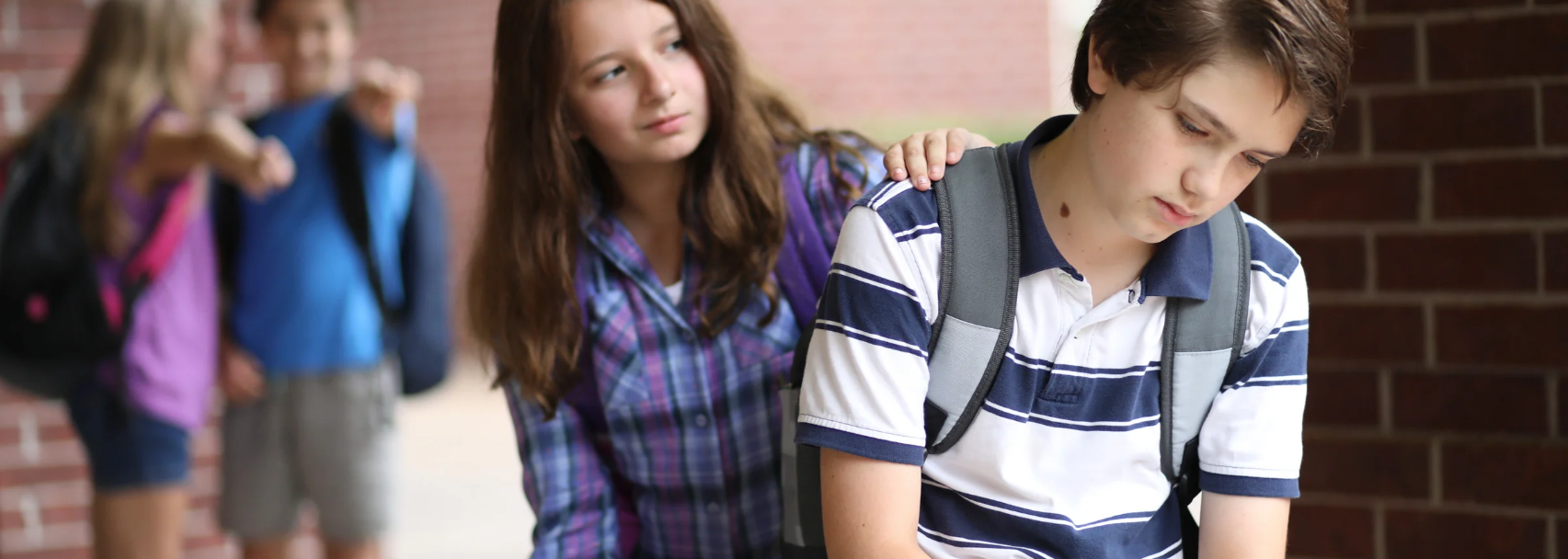
We’ve all seen it. A child leaving someone out at recess. A teen spreading rumors about a classmate. Whether at school, on the playground, or in a social setting, unkind and hurtful behavior can take many forms. Sometimes, it’s more obvious, like name-calling, teasing, physical intimidation, or hurtful messages online. Other times, it’s more subtle, like eye-rolling or giving someone the silent treatment.
Whether obvious or subtle, these behaviors can hurt kids, damage relationships, and create environments where children feel excluded or unsafe.
Understanding what drives unkind behaviors and giving kids the skills to treat themselves and others with kindness and respect are key to preventing bullying.
Understanding the Reasons Behind Bullying Behavior
When it comes to bullying, what we see on the surface is often only part of the story. Think of an iceberg. Above the water, we see the unkind words, teasing, exclusion, or other hurtful behaviors. But beneath the surface, deeper reasons may drive those behaviors. Underdeveloped emotional intelligence (EQ) is one main reason for unkind behavior. The way kids treat each other starts with awareness of themselves and others. When they know how to manage their emotions and relationships and can practice empathizing with others’ feelings, they’re far less likely to make harmful decisions.
So how can parents, teachers, and the trusted adults in kids’ lives help kids develop emotional intelligence and anti-bullying skills?
Here are five practical anti-bullying activities parents and teachers can use to build emotional intelligence, encourage kindness, and help kids thrive together.
Five Anti-Bullying Activities to Encourage Kindness
1. Create a behavior contract.
When creating behavior expectations, the key is to get buy-in from the kids or students. Ask kids to imagine the best classroom, family, or community. What would people say and do? How would they treat one another? Brainstorm ideas together, then put them to a vote.
Here are a few examples of what you may include in your behavior contract:
- Include everyone.
- Respect school property and other people’s materials.
- Stand up for others. Speak up or seek help when someone is being treated unkindly.
- Take responsibility. Own your mistakes, apologize, and work to make things right.
Write down the contract, print it, have everyone sign it, and display it somewhere visible as a reminder of your shared commitments.
2. Develop logical consequences for breaking the contract.
Let your children or students know that if someone breaks the contract (at home or at school), there will be consequences. Develop a list of potential consequences together, but ultimately, you make the call. Consequences could include a written reflection, losing certain privileges (like missing an activity), or writing an apology.
3. Start a compliment card or shout-out tradition.
Set up a shout-out box where children can submit compliments or shout-outs for family members or classmates who show kindness, inclusion, or helpfulness. Read a few aloud during weekly class meetings or at the dinner table at home. Encourage specific examples, like “Sam invited someone new to play at recess,” or “My sister shared a toy with me today.” This also works great for after-school programs, clubs, and teams where students are together.
Read one compliment aloud on a regular schedule. This encourages kids to recognize small acts of kindness.
4. Practice rose and thorn or highs and lows check-ins.
Sometimes, the best way to build empathy is simply to listen. Rose and thorn check-ins give kids an opportunity to share their feelings while learning to understand what others may be experiencing. During a family dinner, morning meeting, or group activity, invite everyone to share:
- A rose: Something positive that happened during their day.
- A thorn: Something challenging, frustrating, or upsetting.
Encourage kids to listen without interrupting or judging, and remind them that it’s okay to pass if they don’t feel comfortable sharing. Afterward, ask questions like, “How did that make you feel?” or “What could someone have done to help?”
5. Initiate Community Building Sessions.
Set aside 5 to 10 minutes each day to help kids practice emotional intelligence through simple group activities. At Frameworks, our Community Building Sessions include:
- Breathing: Start with a calming breathing exercise to practice emotional regulation.
- Greetings and compliments: Build empathy and positive relationships by recognizing and appreciating others.
- Group activities: Strengthen relationship skills and responsible decision-making through shared experiences.
- News and updates: Help kids feel informed, included, and prepared for what’s next.
Key Takeaways: Building Communities Starts With EQ
Preventing bullying means intentionally helping kids develop the emotional intelligence skills they need to understand themselves, empathize with others, navigate conflict, and make responsible choices.
Whether it’s starting the day with an emotional check-in, celebrating acts of kindness, or creating shared expectations, simple anti-bullying activities provide everyday opportunities to practice these skills and build a more caring, inclusive environment.
Start with one activity this week. Invite kids to participate, make it part of your routine, and build from there.
More Practical Tools for Parents & Teachers
Frameworks of Tampa Bay offers interactive workshops (including more strategies for talking with your kids about bullying) and resources that give parents, caregivers, and teachers practical tools to help kids manage big emotions, navigate challenging situations, and build healthier relationships.
About the Author
Julie Hughes is the Education Program Director at Frameworks of Tampa Bay, where she develops professional learning experiences and resources centered on emotional intelligence and relationship-building. Before joining Frameworks as a content specialist, Julie spent 20 years as an educator working with students across public, private, and charter schools. Her work focuses on helping students, families, and educators build stronger connections and supportive learning communities.